GABA tea
What is GABA?
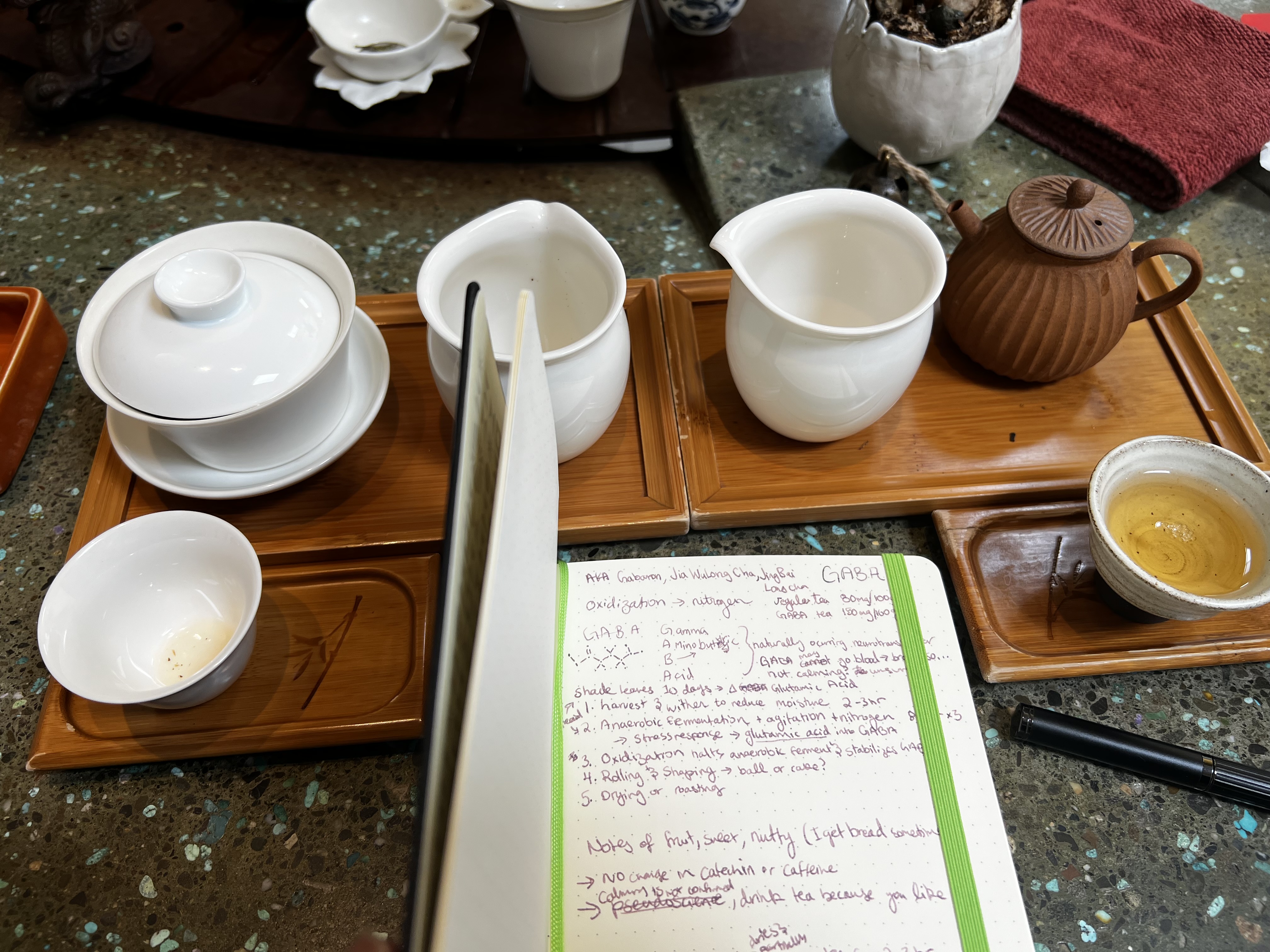
GABA stands for Gamma AminoButyric Acid. It is the primary inhibitory neurotransmitter in the human brain. In the brain, GABA has a calming effect on the nervous system.
When we talk about GABA tea, we're referencing teas that have a higher level of GABA content in them due to special processing.
Origin of GABA Tea
The GABA tea process was invented in Japan in 1984. This method can be applied to green, oolong, and red teas, but is most commonly used with a modified oolong tea process.
Tojiro Tsushida; Toshinobu Murai; Masashi Omori; Jyunko Okamoto (1987). "Production of a New Type Tea Containing a High Level of gamma-Aminobutyric Acid". Nippon Nogeikagaku
How It's Made
Instead of oxidization, tea leaves undergo anaerobic fermentation in the presence of nitrogen. This causes glutamic acid in the leaves to convert into GABA as a stress response. The anaerobic fermentation happens in yan yangji machines.
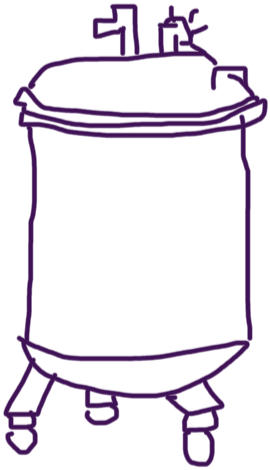
artist’s rendition of a yan yangji machine. please be nice to the artist.
Outside of this, the processing is fairly similar to that of any other oolong. The tea is picked after shading and withered in da lang machines, oxidized after the GABA process, rolled into balls or shaped into cakes, and dried or roasted to complete the process.
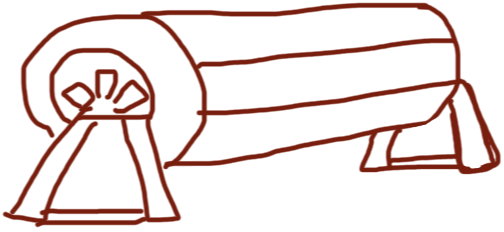
artist’s rendition of a da lang machine. again, the artist is pretty sensitive to critiques.
Shading the tea plants for a few weeks before harvest increases glutamic acid, the precursor to GABA. A similar shading process is also what gives Gyokuro its special characteristics.
Where It's Made
Most GABA teas are grown and processed in Taiwan. However, some Yunnan farms also produce GABA tea, particularly targeting Russian consumers.
Common Misconceptions
- GABA is not artifically introduced to the leaves. All tea contains some GABA (maybe 80mg/100g) but GABA oolong contains about twice as much (closer to 150mg/100g). The process of converting glutamic acid to GABA is a natural stress response in the tea leaves.
- The GABA process does not reduce caffeine or catechins in the tea. GABA oolong contains the same amount of caffeine as regular tea, plus additional GABA.
- The science is inconclusive on whether drinking GABA tea has calming effects. It’s unclear whether external GABA can cross the blood-brain barrier. My personal stance on tea's health benefits stays consistent. Drink tea for the health benefits of enjoying the activity itself with friends and loved ones.
Trusted Sources for GABA
Teance Fine Teas in Berkeley has a very special GABA teacalled Honey Jia Long that combines two processes: bug-bitten tea and GABA tea. It's one of my favorite teas of all time!
Final Thoughts
Personally, I love the concept of stress leading to new forms of tea. It makes me feel like people are the same, we adapt to our circumstances and build unique defenses. I guess this is what people mean when they say something builds character.
For other examples of the effect of unique stresses on tea, check out bug-bitten tea, rock oolong, or Gyokuro.